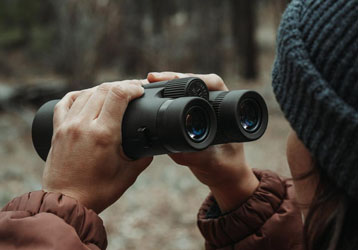










Marine Binoculars: Essential Optical Equipment for Navigation, Boating, Fishing, and Offshore Observation
Marine environments present unique observation challenges. Constant vessel movement, changing weather conditions, water reflections, fog, rain, and long observation distances require optical equipment that is both durable and reliable.
Marine binoculars are specifically designed for use on boats, yachts, fishing vessels, coastlines, ports, and offshore platforms. Compared with standard binoculars, marine models often feature larger objective lenses, waterproof construction, fog resistance, and enhanced low-light performance.
Whether used for navigation, marine patrol, fishing, sailing, or coastal observation, professional marine binoculars can help users identify distant objects more clearly and improve situational awareness on the water.
What Are Marine Binoculars?
Marine binoculars are optical instruments designed for maritime environments.
Typical applications include:
Navigation
Sailing
Commercial shipping
Fishing
Marine patrol
Harbor monitoring
Offshore inspection
Coastal observation
Search and rescue
Unlike ordinary binoculars, marine models are often optimized for use in challenging weather and unstable viewing conditions.
Why Marine Observation Requires Specialized Binoculars
Observing objects at sea is often more difficult than observing on land.
Challenges include:
Vessel movement
Wind and waves
Water reflections
Fog and humidity
Long observation distances
Low-light conditions
A binocular that performs well on land may not provide the same experience in marine environments.
Professional marine binoculars are designed to address these challenges through optical performance and environmental protection.
Common Marine Binocular Configurations
7×50 Marine Binoculars
The most recognized marine binocular configuration is 7×50.
This means:
7× magnification
50 mm objective lens diameter
Advantages include:
Stable image
Bright image
Large exit pupil
Good low-light performance
Comfortable viewing
For many marine users, 7×50 remains the standard choice.
8×42 Marine Binoculars
Advantages include:
More compact size
Reduced weight
Good optical performance
Suitable for recreational boating
These binoculars are often preferred by users who value portability.
10×50 Marine Binoculars
Advantages include:
Increased magnification
Better long-distance observation
Suitable for coastal monitoring
However, higher magnification may make image shake more noticeable on moving vessels.
Why 7× Magnification Is Popular at Sea
Many new users assume higher magnification is always better.
In marine environments, this is not necessarily true.
When observing from a moving boat:
Higher magnification increases image movement
Tracking objects becomes more difficult
Image stability becomes more important
The 7× magnification level provides a balance between:
Observation detail
Viewing comfort
Image stability
This is one reason why 7×50 binoculars remain widely used in maritime applications.
Large Objective Lenses for Marine Observation
Marine binoculars often use larger objective lenses.
Common sizes include:
42 mm
50 mm
56 mm
Larger objectives can collect more light, which may help improve viewing performance during:
Dawn
Dusk
Overcast weather
Low-light marine conditions
However, larger lenses also increase binocular size and weight.
Waterproof Marine Binoculars
Water resistance is one of the most important features of marine binoculars.
Marine environments expose equipment to:
Rain
Salt spray
Humidity
Waves
Sudden weather changes
Professional marine binoculars often feature:
Waterproof housing
Sealed optical system
Corrosion-resistant materials
Protective rubber armor
Users should always verify the manufacturer's waterproof specifications before selecting a product.
Fog-Proof Performance
Temperature changes can cause internal lens fogging.
To reduce this risk, many marine binoculars use:
Nitrogen purging
Argon purging
Sealed optical chambers
Fog-resistant designs help maintain clear viewing under changing environmental conditions.
Marine Binoculars with Compass
Some professional marine binoculars integrate a built-in compass.
Applications include:
Navigation
Direction measurement
Position reference
Marine observation
A built-in compass can help users determine the bearing of an observed object without carrying additional equipment.
Marine Binoculars with Range Reticle
Certain marine binoculars include a ranging reticle.
A ranging reticle can assist with:
Distance estimation
Object measurement
Navigation reference
This feature is commonly used by:
Professional mariners
Marine patrol personnel
Search and rescue teams
Distance estimates should always be treated as approximations and may require additional navigation equipment for confirmation.
Optical Coatings for Marine Binoculars
High-quality optical coatings can improve:
Light transmission
Contrast
Image brightness
Reflection control
Modern marine binoculars often use:
Fully multicoated optics
Phase-corrected prism coatings
Dielectric prism coatings
These technologies help optimize optical performance in challenging marine environments.
ED Glass for Marine Observation
Premium marine binoculars may incorporate ED (Extra-low Dispersion) glass.
Benefits can include:
Reduced chromatic aberration
Improved image sharpness
Better color fidelity
Enhanced long-distance observation
ED glass is particularly useful when observing high-contrast subjects against bright water or sky backgrounds.
Marine Binocular Applications
Recreational Boating
Useful for:
Navigation
Harbor approach
Obstacle identification
Wildlife observation
Sailing
Applications include:
Marker identification
Coastal navigation
Weather observation
Vessel monitoring
Fishing
Marine binoculars can assist with:
Locating fishing activity
Monitoring distant boats
Observing birds
Coastal navigation
Harbor Operations
Applications include:
Vessel observation
Dock monitoring
Traffic management
Security observation
Search and Rescue
Marine binoculars can support:
Person-overboard observation
Coastal rescue
Emergency monitoring
Maritime patrol
Image-Stabilized Marine Binoculars
Modern marine optics increasingly incorporate image stabilization technology.
Advantages include:
Reduced image shake
Improved viewing comfort
Better target observation
Enhanced long-distance viewing
Image-stabilized binoculars are particularly useful when operating from moving vessels.
Marine Binoculars vs. Standard Binoculars
| Feature | Marine Binoculars | Standard Binoculars |
|---|---|---|
| Waterproof Protection | High | Varies |
| Fog Resistance | Common | Model dependent |
| Compass Option | Available | Rare |
| Large Objective Lens | Common | Varies |
| Marine Navigation Features | Available | Usually absent |
| Corrosion Resistance | Enhanced | Standard |
| Designed for Marine Use | Yes | General use |
How to Choose Marine Binoculars
1. Magnification
For most marine applications:
7×50 is widely used
8×42 offers portability
10×50 provides greater reach
2. Waterproof Protection
Choose binoculars specifically designed for marine environments.
3. Optical Quality
Consider:
ED glass
Optical coatings
Prism quality
Lens design
4. Weight and Ergonomics
Marine binoculars may be used for extended periods.
Comfortable grip and balanced weight are important.
5. Additional Features
Depending on requirements:
Built-in compass
Range reticle
Image stabilization
Digital connectivity
Future Trends in Marine Binocular Technology
Digital Navigation Integration
Future marine binoculars may integrate:
GPS
Digital compass
Electronic charts
Wireless connectivity
AI-Assisted Observation
Artificial intelligence may assist with:
Vessel recognition
Object tracking
Navigation support
Thermal Marine Binoculars
Thermal imaging technology is increasingly being combined with binocular systems.
Potential applications include:
Night navigation
Search and rescue
Security patrol
Offshore monitoring
Smart Marine Observation Systems
Future systems may combine:
Daytime optics
Thermal imaging
Laser rangefinding
GPS positioning
AI analysis
Providing users with comprehensive maritime situational awareness.
Conclusion
Marine binoculars are essential optical tools for boating, sailing, fishing, navigation, offshore inspection, and maritime safety operations.
Compared with standard binoculars, marine models provide enhanced durability, waterproof protection, fog resistance, and optical performance suitable for challenging ocean environments.
Whether selecting a classic 7×50 marine binocular, a compact 8×42 marine binocular, or an advanced model with compass, image stabilization, or thermal imaging capabilities, users should choose according to their observation requirements and operating environment.
As marine technology continues to evolve, future binocular systems will increasingly integrate digital navigation, thermal imaging, laser ranging, and intelligent observation technologies, creating more advanced solutions for maritime professionals and outdoor enthusiasts.