









Laser Rangefinder Binoculars for Mountain Observation: Features and Applications
Laser Rangefinder Binoculars for Mountain Observation
Mountain environments often involve long observation distances, complex terrain and changing weather conditions.
Outdoor users may need to observe distant mountains, slopes, valleys, rocks, trails and other landscape features.
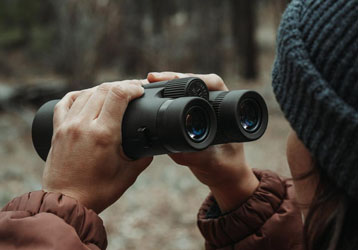
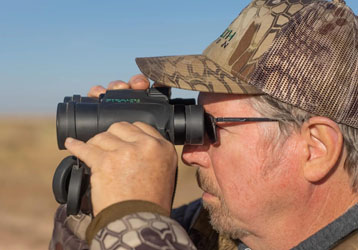
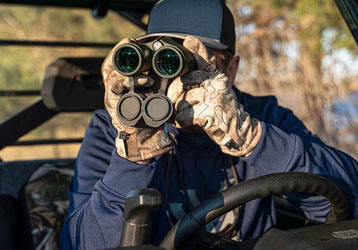
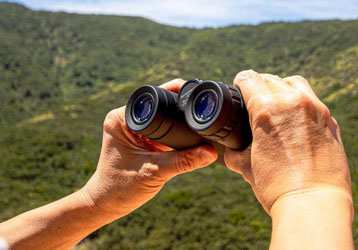
Traditional binoculars can provide magnified visual observation. Laser rangefinder binoculars add distance measurement capability, allowing users to combine optical observation and distance measurement in one device.
This integrated design can support outdoor activities and professional applications involving:
Mountain observation
Terrain assessment
Long-distance viewing
Distance measurement
Remote target identification
Outdoor field observation
The most suitable product configuration depends on the observation distance, terrain conditions and specific application requirements.
What Are Laser Rangefinder Binoculars?
Laser rangefinder binoculars combine:
Binocular optical systems
Laser distance measurement technology
Electronic processing
Digital display systems
Users can observe a distant object through the binocular optical system.
After identifying an appropriate target, the integrated laser rangefinder can provide distance information.
The typical workflow is:
Observe → Identify → Aim → Measure → Read
This can reduce the need to switch between separate binoculars and distance measurement devices.
Why Are Rangefinder Binoculars Useful for Mountain Observation?
Mountain landscapes can cover large areas.
Objects may be located at significantly different distances.
Users may need to observe:
Mountain peaks
Slopes
Valleys
Rocks
Trails
Trees
Remote buildings
Other terrain features
Optical magnification helps users observe distant objects.
Laser distance measurement can provide additional information about the distance to suitable targets.
Long-Distance Mountain Observation
Long-distance observation is an important requirement in mountain environments.
A suitable optical system can help users:
Locate distant terrain features
Identify observation points
Observe mountain slopes
Scan valleys
Identify remote objects
The appropriate magnification depends on the expected observation distance and handheld stability.
Terrain Observation
Mountain terrain can be complex.
The landscape may include:
Steep slopes
Deep valleys
Rocky areas
Forests
Open land
Elevated terrain
Rangefinder binoculars can provide both visual and distance information for selected terrain features.
Optical Magnification
Magnification is an important specification for mountain observation.
Common binocular configurations may include:
8× magnification
10× magnification
12× magnification
Higher magnification can make distant objects appear larger.
However, higher magnification can also make handheld movement more noticeable.
The best configuration depends on:
Observation distance
Field of view
Handheld stability
Product weight
Field of View
Field of view is important when scanning large mountain environments.
A suitable field of view can help users:
Scan slopes
Locate trails
Observe valleys
Find distant landmarks
Identify objects
Magnification and field of view should be considered together.
A balanced configuration can improve overall observation efficiency.
Objective Lens and Image Brightness
Mountain observation may take place under changing light conditions.
The objective lens collects light entering the optical system.
A suitable optical design can support observation during:
Early morning
Late afternoon
Cloudy weather
Shaded mountain areas
Buyers should consider both optical performance and portability.
Laser Distance Measurement
Distance measurement can help users understand the scale of the mountain environment.
Potential measurement targets may include:
Rocks
Trees
Buildings
Mountain slopes
Terrain features
Practical performance can depend on:
Target size
Target reflectivity
Measurement distance
Atmospheric conditions
Product specifications
Measuring Mountain Terrain
Mountain terrain may involve different elevation levels.
Users may observe targets:
Above the observer
Below the observer
Across a valley
Along a mountain slope
Angle-related measurement functions may be useful for applications involving complex terrain.
The required functions depend on the intended use.
Long-Distance Measurement Range
Mountain observation may require longer measurement distances.
However, the maximum advertised range is not the only important specification.
Actual measurement performance may depend on:
Target size
Target surface
Atmospheric conditions
Laser beam divergence
Background conditions
Buyers should select products according to realistic working distances.
Target Size and Mountain Measurement
Large terrain features may be easier to measure.
Examples include:
Large rocks
Mountain slopes
Buildings
Large trees
Smaller targets can be more challenging at long distances.
Examples include:
Narrow poles
Small structures
Isolated objects
Target characteristics should be considered when evaluating rangefinder performance.
Laser Beam Divergence
Laser beam divergence describes how the laser beam expands over distance.
At longer distances, the laser spot can become larger.
This can influence target selection when measuring distant or narrow objects.
For mountain applications, buyers should consider:
Expected working distance
Target size
Beam divergence
Optical magnification
These factors can influence practical measurement performance.
Weather Conditions in Mountain Environments
Mountain weather can change quickly.
Potential environmental conditions include:
Rain
Fog
Snow
Humidity
Strong sunlight
Low temperatures
Wind
These conditions can influence both observation and distance measurement.
Environmental protection is therefore an important consideration for outdoor equipment.
Waterproof and Outdoor Protection
Mountain observation equipment may be exposed to harsh environments.
Important specifications may include:
Waterproof protection
Dust resistance
Operating temperature
Housing durability
Mechanical protection
The appropriate protection level depends on the expected environment.
Lightweight and Portable Design
Mountain users may carry equipment for extended periods.
Weight can influence:
Carrying comfort
Outdoor portability
Handheld observation
Travel convenience
A balance between optical performance and product weight can improve field usability.
Battery Performance
The electronic measurement system requires power.
For outdoor mountain applications, buyers may consider:
Battery operating time
Battery type
Charging method
Replacement convenience
Low-temperature performance
Reliable battery performance can be important during long outdoor activities.
How to Choose Rangefinder Binoculars for Mountain Observation
Before purchasing, ask the following questions:
What is the normal observation distance?
What is the maximum measurement distance required?
What type of terrain will be observed?
Will the product be used in cold or wet conditions?
Is low-light observation important?
Is long-distance target identification required?
How important is product weight?
The answers can help determine the appropriate configuration.
Recommended Features to Compare
| Specification | Why It Matters |
|---|---|
| Magnification | Supports long-distance observation |
| Field of View | Helps scan large terrain areas |
| Objective Lens | Influences image brightness |
| Measurement Range | Determines distance capability |
| Measurement Accuracy | Supports reliable distance information |
| Beam Divergence | Influences target selection |
| Angle Measurement | Useful for complex terrain |
| Waterproof Protection | Supports outdoor use |
| Battery | Supports extended operation |
| Weight | Influences portability |
A complete specification comparison is recommended before purchasing.
Rangefinder Binoculars vs Traditional Binoculars
Traditional Binoculars
Primary function:
Optical Observation
Laser Rangefinder Binoculars
Primary functions:
Optical Observation + Distance Measurement
The choice depends on whether distance information is required during outdoor observation.
Rangefinder Binoculars vs Handheld Rangefinders
A handheld rangefinder may be smaller and easier to carry.
However, a rangefinder binocular provides integrated optical observation.
Handheld Rangefinder
Suitable when:
Distance measurement is the primary requirement.
Compact size is important.
Extended optical observation is not required.
Rangefinder Binoculars
Suitable when:
Long-distance observation is important.
Terrain scanning is required.
Distance information is also needed.
Professional Mountain Applications
Laser rangefinder binoculars can support selected professional applications such as:
Mountain surveys
Outdoor inspection
Terrain observation
Forestry observation
Infrastructure observation
Environmental fieldwork
The appropriate configuration depends on the specific application requirements.
How to Test Rangefinder Binoculars
Before bulk purchasing, professional buyers can request samples.
Recommended testing may include:
Optical Performance Test
Evaluate image clarity and distant target visibility.
Terrain Measurement Test
Measure representative rocks, slopes and structures.
Long-Distance Test
Test performance near the expected working distance.
Weather Test
Evaluate the product under realistic environmental conditions.
Battery Test
Evaluate operating time during field use.
Ergonomic Test
Evaluate handheld comfort and operational convenience.
B2B Buying Considerations
Professional buyers should evaluate both product performance and supplier capability.
Important considerations include:
Product quality
Quality consistency
Manufacturing capability
Sample availability
OEM support
ODM capability
Packaging customization
Production capacity
Delivery capability
Technical support
A reliable supplier can support long-term product development.
OEM Rangefinder Binoculars
OEM services may support distributors and brands.
Possible customization options include:
Brand logo
Product labels
Packaging
User manuals
Accessories
OEM products can help businesses establish their own branded optical product lines.
ODM Rangefinder Binocular Solutions
ODM development may be suitable for customers with specialized requirements.
Possible customization areas include:
Optical configuration
Product housing
Measurement functions
Software
Accessories
Product design
Clear technical requirements should be established before development.
Frequently Asked Questions
Can laser rangefinder binoculars be used for mountain observation?
Yes. They can combine optical observation and distance measurement for suitable mountain and outdoor applications.
What magnification is suitable for mountain observation?
The appropriate magnification depends on observation distance, field of view and handheld stability requirements.
Can rangefinder binoculars measure mountain terrain?
They can measure the distance to suitable terrain features, depending on the product and environmental conditions.
Does weather affect laser rangefinder performance?
Rain, fog, snow and other atmospheric conditions can affect practical measurement performance.
Why is beam divergence important?
Beam divergence affects the size of the laser spot at longer distances and can influence target selection.
Are waterproof rangefinder binoculars important for mountains?
Outdoor equipment may require suitable environmental protection depending on the expected conditions.
Should B2B buyers test samples?
Yes. Sample testing under realistic mountain or outdoor conditions can help evaluate practical performance.
Can rangefinder binoculars be customized?
Depending on the manufacturer, OEM and ODM customization services may be available.
Looking for Professional Rangefinder Binoculars for Mountain Observation?
If you are sourcing laser rangefinder binoculars for mountain observation, terrain assessment or long-distance outdoor measurement, selecting the right configuration depends on your observation distance, target type and environmental conditions.
Available support may include:
Professional rangefinder binocular solutions
Long-distance optical observation
Outdoor distance measurement
Sample evaluation
OEM branding
ODM development
Private-label production
Custom packaging
Bulk orders
Technical support
Request Product Specifications
Ask for a Quote
Send Us Your Application Requirements