









10×42 Binoculars: Complete Guide for Hunting, Bird Watching and Long-Distance Observation
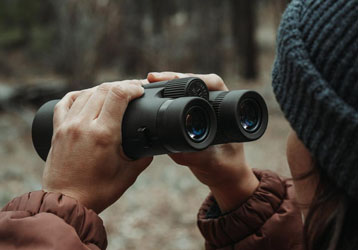
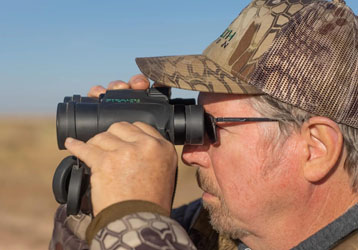
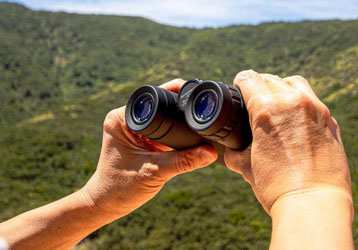
10×42 binoculars are one of the most versatile binocular configurations for outdoor observation. They combine 10× magnification with 42 mm objective lenses, providing a useful balance between detail, portability, field of view, and low-light capability.
For users who need to observe distant birds, wildlife, landscapes, hunting areas, sporting events, or other outdoor subjects, 10×42 binoculars can provide more magnification than 8×42 binoculars while remaining relatively compact.
This guide explains what 10×42 binoculars are, their advantages and limitations, and how to choose the right model for different outdoor applications.
What Does 10×42 Mean?
The numbers 10×42 describe two fundamental specifications.
10× Magnification
The first number means the binoculars provide approximately 10 times magnification.
A distant object appears significantly closer compared with viewing it with the naked eye.
Higher magnification can be useful for:
Long-distance wildlife observation
Bird watching
Hunting
Mountain viewing
Landscape observation
Sports observation
42 mm Objective Lens
The second number refers to the diameter of the objective lenses.
A 42 mm objective lens provides a larger light-collecting aperture than smaller configurations such as 8×32 binoculars.
The combination of 10× magnification and 42 mm objective lenses creates a versatile optical configuration for many outdoor applications.
Why Are 10×42 Binoculars So Popular?
10×42 binoculars offer a practical compromise between magnification and portability.
Compared with very high-magnification binoculars, they are generally easier to use handheld.
Compared with lower-magnification binoculars, they provide additional detail when viewing distant subjects.
This makes them suitable for users who want one binocular configuration for multiple activities.
Common applications include:
Bird watching
Wildlife observation
Hunting
Hiking
Travel
Nature observation
Mountain viewing
Outdoor sports
10×42 Binoculars vs 8×42 Binoculars
One of the most common comparisons is 10×42 vs 8×42 binoculars.
Both use the same 42 mm objective lens, but the magnification is different.
| Feature | 8×42 Binoculars | 10×42 Binoculars |
|---|---|---|
| Magnification | 8× | 10× |
| Objective lens | 42 mm | 42 mm |
| Exit pupil | 5.25 mm | 4.2 mm |
| Image stability | Easier | More sensitive to movement |
| Field of view | Often wider | Often narrower |
| Long-distance detail | Good | Better potential |
| Bird watching | Excellent | Excellent |
| Hunting | Excellent | Excellent |
| Wildlife observation | Excellent | Excellent |
| Hiking | Excellent | Very good |
| Low-light potential | Higher exit pupil | Lower exit pupil |
The choice depends on your observation style.
Choose 8×42 when you prioritize stability, wider viewing, and comfortable general observation.
Choose 10×42 when you prioritize additional magnification and distant detail.
Understanding the 10×42 Exit Pupil
Exit pupil is calculated using:
Objective Lens Diameter ÷ Magnification
For 10×42 binoculars:
42 ÷ 10 = 4.2 mm
This means the exit pupil is approximately 4.2 mm.
A 4.2 mm exit pupil can provide a useful balance for general outdoor observation.
Compared with 8×42 binoculars, which have an exit pupil of approximately 5.25 mm, 10×42 binoculars may provide less margin for very low-light observation.
However, actual image brightness also depends on optical transmission, lens coatings, glass quality, prism performance, and the observer's viewing conditions.
10×42 Binoculars for Bird Watching
10×42 binoculars are widely suitable for bird watching.
The 10× magnification can help bird watchers inspect distant subjects while maintaining a relatively manageable binocular size.
They can be particularly useful for:
Open fields
Wetlands
Coastal areas
Mountains
Large parks
Forest edges
The additional magnification can help reveal details such as:
Feather patterns
Body markings
Beak shape
Wing details
Distant movement
However, birds can move quickly.
If you frequently track birds in dense forests or close-range environments, an 8× binocular may offer easier target acquisition because of its potentially wider field of view and more stable image.
10×42 Binoculars for Hunting
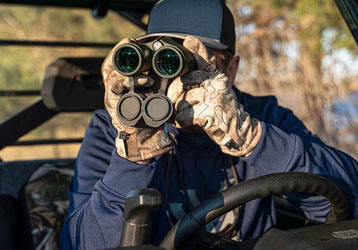
For hunting applications, 10×42 binoculars provide a strong combination of magnification and portability.
The 10× magnification can help hunters inspect distant terrain without requiring an extremely large binocular.
10×42 hunting binoculars can be useful for:
Open terrain
Mountain environments
Forest edges
Long-distance scanning
Wildlife identification
Early morning observation
However, hunting binoculars should not be selected by magnification alone.
Other important features include:
Optical clarity
Low-light performance
Field of view
Waterproof construction
Fogproof design
Weight
Focusing speed
Ergonomic handling
10×42 Binoculars for Wildlife Observation
Wildlife observation often involves subjects at unpredictable distances.
A 10×42 binocular provides additional magnification compared with an 8×42 configuration, which can be useful when animals are far away.
They are suitable for observing:
Deer
Birds
Mountain animals
Marine wildlife
Large mammals
Distant natural landscapes
For wildlife observation, field of view is also important.
If the subject is moving quickly, a very narrow field of view can make tracking more difficult.
The best binocular therefore balances magnification with field of view and image stability.
10×42 Binoculars for Long-Distance Observation
Long-distance observation is one of the strongest applications for 10×42 binoculars.
The 10× magnification provides additional visual detail compared with 8× binoculars.
They can be used for:
Mountain observation
Landscape viewing
Wildlife identification
Outdoor events
Coastal observation
Long-distance nature viewing
For extremely distant subjects, higher magnification may be useful, but increasing magnification also increases sensitivity to hand movement.
This is why 10×42 is often considered a practical middle ground.
Image Stability and Handheld Use
One limitation of 10× binoculars is increased sensitivity to hand movement.
Small movements become more noticeable as magnification increases.
This does not mean 10×42 binoculars cannot be used handheld.
In fact, many users comfortably use them without a tripod.
To improve stability:
Hold the binoculars with both hands
Support your elbows when possible
Keep a relaxed posture
Avoid unnecessary movement
Use a stable standing or sitting position
For prolonged high-magnification observation, a tripod or support system may provide additional stability if the binocular design allows it.
Field of View in 10×42 Binoculars
Field of view is another important consideration.
A binocular with a wider FOV makes it easier to:
Locate birds
Scan landscapes
Track wildlife
Follow moving subjects
Higher magnification often corresponds with a narrower field of view, although the actual specification depends on the optical design.
When comparing different 10×42 binoculars, always check the actual field-of-view specification.
Do not assume that every 10×42 binocular has the same viewing angle.
ED Glass for 10×42 Binoculars
Some 10×42 binoculars use ED glass, or Extra-Low Dispersion glass.
ED optical elements can help reduce chromatic aberration and improve image clarity.
This can be useful when viewing high-contrast subjects such as:
Birds against bright skies
Wildlife against snow
Distant buildings
Tree branches
Mountain ridges
For users who prioritize image detail, ED glass can be an important specification to consider.
However, ED glass should be evaluated together with the rest of the optical system.
Optical Coatings and Image Quality
Lens coatings can significantly influence binocular performance.
A fully multi-coated optical system can help improve light transmission and image contrast.
When evaluating 10×42 binoculars, consider:
Lens coating quality
Prism coatings
Optical glass
Image contrast
Color reproduction
Resolution
A high-quality optical system can provide a clearer and more comfortable image than a basic system with similar headline specifications.
Roof Prism 10×42 Binoculars
Many modern 10×42 binoculars use a roof prism design.
Roof prism binoculars generally have a slim, streamlined body.
Advantages can include:
Compact shape
Convenient handling
Lower-profile body
Good portability
Easy integration into sealed housings
This makes roof prism 10×42 binoculars particularly attractive for:
Hunting
Bird watching
Travel
Hiking
Wildlife observation
When choosing roof prism binoculars, prism coatings and optical alignment are also important considerations.
Waterproof and Fogproof 10×42 Binoculars
Outdoor users may encounter rain, humidity, temperature changes, and condensation.
For demanding outdoor applications, consider 10×42 binoculars with:
Waterproof housing
Fogproof construction
Sealed optical system
Durable external armor
Secure focusing mechanism
These features can help improve reliability during outdoor observation.
However, waterproof and fogproof performance depends on the actual construction of the binoculars rather than simply the presence of a particular prism design.
10×42 Binoculars for Travel
For travelers, 10×42 binoculars provide more magnification while remaining relatively portable.
They can be useful for:
Wildlife tours
Safari
Sightseeing
Coastal travel
Mountain trips
Nature tourism
If minimizing luggage weight is the top priority, an 8×32 binocular may be more convenient.
If viewing distant subjects is more important, 10×42 can be the better choice.
10×42 vs 10×50 Binoculars
Another common comparison is 10×42 vs 10×50 binoculars.
Both provide 10× magnification, but the objective lens is larger on the 10×50 configuration.
10×42
More compact
Lighter
Easier to carry
Good general-purpose performance
Exit pupil approximately 4.2 mm
10×50
Larger objective lens
Larger exit pupil
Greater light-gathering potential
Usually heavier
Better suited to users who accept additional size and weight
For travel and hiking, 10×42 may be more practical.
For lower-light observation, 10×50 can provide additional optical capability.
Is 10×42 Good for Low-Light Observation?
10×42 binoculars can perform well in many outdoor lighting conditions.
However, they are not necessarily the best choice when maximum low-light performance is the primary objective.
The 4.2 mm exit pupil is smaller than that of:
8×42
10×50
12×56
When observing around dawn, dusk, or under heavily overcast conditions, binoculars with larger exit pupils may offer advantages.
For general daytime observation, however, 10×42 can provide an excellent balance.
How to Choose the Best 10×42 Binoculars
When comparing 10×42 binoculars, consider the following specifications.
Optical Glass
Look for high-quality optical glass and, where appropriate, ED elements.
Lens Coatings
Fully multi-coated optics can improve light transmission and contrast.
Prism System
Roof prism designs provide a compact form factor, while other prism architectures may offer different advantages.
Field of View
A wider FOV can make moving subjects easier to track.
Close Focus
A shorter close-focus distance can be useful for nature observation.
Waterproofing
Useful for hiking, hunting, bird watching, and other outdoor activities.
Weight
Important when binoculars are carried for many hours.
Focusing
A smooth and responsive focus mechanism can improve usability.
Common Mistakes When Buying 10×42 Binoculars
Choosing Magnification Without Considering Stability
10× magnification provides more detail, but it is more sensitive to hand movement than 8× magnification.
Ignoring Field of View
High magnification with a narrow FOV may make moving subjects harder to track.
Focusing Only on Objective Lens Size
A 42 mm objective lens is versatile, but optical coatings and glass quality are also important.
Ignoring Weight
Long observation sessions can make heavy binoculars uncomfortable.
Choosing Based Only on Price
The actual optical and mechanical quality of binoculars can vary significantly even when specifications look similar.
Frequently Asked Questions
Are 10×42 binoculars good for bird watching?
Yes. 10×42 binoculars provide useful magnification for observing distant birds while maintaining a relatively compact design.
Are 10×42 binoculars good for hunting?
Yes. They can be an excellent choice for hunting, particularly for open terrain and long-distance observation.
Which is better, 8×42 or 10×42?
8×42 binoculars generally provide easier handheld stability and a wider viewing experience, while 10×42 binoculars provide greater magnification and distant detail.
Are 10×42 binoculars good for low light?
They can perform well in moderate outdoor lighting, but configurations with larger exit pupils may be better when low-light performance is the primary concern.
What is the exit pupil of 10×42 binoculars?
The exit pupil is approximately 4.2 mm, calculated by dividing the 42 mm objective diameter by the 10× magnification.
Are 10×42 binoculars good for wildlife?
Yes. They are highly versatile for wildlife observation, especially when subjects are located at medium or long distances.
Are 10×42 binoculars too powerful for handheld use?
Not necessarily. Many users can comfortably use 10×42 binoculars handheld, although they are more sensitive to hand movement than 8× binoculars.
Final Thoughts
10×42 binoculars provide an excellent balance between magnification, portability, and outdoor versatility.
They are particularly suitable for:
Bird watching
Hunting
Wildlife observation
Long-distance viewing
Hiking
Travel
Nature observation
Compared with 8×42 binoculars, they provide more magnification but can be slightly harder to stabilize and may have a narrower field of view.
Compared with 10×50 binoculars, they are generally more compact and easier to carry.
For users who want a versatile binocular for distant outdoor observation without moving to a much larger optical system, 10×42 binoculars are a practical and flexible choice.
The best model should not be selected based on magnification and objective lens size alone. Optical glass, lens coatings, field of view, prism system, waterproofing, weight, focusing performance, and overall construction should all be considered.