








Laser Speed Gun vs Radar Speed Gun Accuracy: Which Technology Is Better?
Laser speed guns and radar speed guns are two widely recognized technologies for measuring the speed of moving vehicles.
Both are used in traffic monitoring, transportation research, road safety assessments, and authorized speed enforcement applications.
However, the two technologies use different measurement principles and have different operating characteristics.
For professional buyers, understanding these differences is important when selecting suitable traffic speed measurement equipment.
This guide compares laser and radar speed gun accuracy, target detection capabilities, measurement conditions, and practical applications.
What Is a Laser Speed Gun?
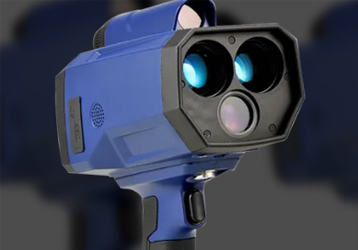
A laser speed gun is an electronic measurement device that uses laser-based distance measurement technology to calculate vehicle speed.
It generally operates using LIDAR, which stands for Light Detection and Ranging.
The device emits laser pulses toward a selected vehicle and measures the time required for the reflected signals to return.
By collecting multiple distance measurements over a short period, the internal processor calculates how quickly the distance between the instrument and the target is changing.
Laser speed guns are commonly used in applications where targeted measurement of individual vehicles is important.
What Is a Radar Speed Gun?
A radar speed gun measures the speed of moving vehicles using radio signals.
Conventional Doppler radar devices transmit radio waves and analyze the frequency difference between the transmitted signal and the signal reflected by a moving target.
This frequency change is used to calculate the vehicle's radial speed relative to the radar instrument.
Radar technology is used in different equipment configurations, including portable speed guns and fixed traffic monitoring systems.
Its practical performance depends on the sensor design, operating mode, surrounding traffic conditions, and correct use.
Laser Speed Gun vs Radar Speed Gun: Key Differences
Although both technologies measure vehicle speed, they differ in several important areas.
| Comparison Factor | Laser Speed Gun | Radar Speed Gun |
|---|---|---|
| Measurement Principle | Laser-based distance change | Doppler frequency shift |
| Signal Type | Laser light | Radio waves |
| Targeting | Relatively narrow beam | Depends on antenna pattern and system design |
| Measurement Information | Speed and, on some models, distance | Speed and model-dependent additional data |
| Typical Configurations | Handheld and specialized systems | Portable and fixed systems |
| Performance Factors | Target reflectivity, aiming, weather, geometry | Signal reflections, target identification, geometry, system configuration |
| Accuracy | Depends on verified product specifications | Depends on verified product specifications |
Neither technology should be considered universally more accurate without comparing specific products under defined testing conditions.
Which Is More Accurate: Laser or Radar?
There is no single answer that applies to every laser and radar speed gun.
Accuracy depends on the complete measurement system, including sensor design, signal processing, calibration, operating conditions, and correct measurement procedures.
A high-quality laser speed gun may provide reliable measurements within its specified operating range.
Similarly, a properly designed radar speed gun can provide reliable speed measurements when used under suitable conditions.
Professional buyers should compare documented accuracy specifications rather than relying only on the measurement technology.
Target Identification and Measurement Precision
One important distinction between laser and radar technology is target selection.
Laser Targeting
Laser speed guns generally use a relatively narrow beam.
This characteristic can help trained operators aim at a selected vehicle.
However, correct target identification still depends on measurement distance, aiming stability, optical design, and traffic conditions.
Radar Targeting
Radar equipment uses radio signals, and its detection area depends on antenna design and operating configuration.
In environments involving multiple vehicles, target identification requires appropriate equipment capabilities and operating procedures.
Modern radar systems may incorporate additional processing features, but buyers should verify the functions of the specific model.
How Does Measurement Angle Affect Accuracy?
Both laser and conventional Doppler radar speed measurements are affected by measurement geometry.
These devices measure the component of vehicle velocity along the instrument's line of sight.
When the measurement direction forms an angle with the vehicle's direction of travel, the measured radial speed differs from the vehicle's actual speed.
This is commonly referred to as the cosine effect.
The practical implications depend on the equipment configuration, operating procedure, and measurement geometry.
Understanding this effect is important when evaluating measurement results and selecting suitable monitoring locations.
Environmental Factors Affecting Laser and Radar Speed Guns
Weather Conditions
Laser speed measurement can be affected by environmental conditions that reduce optical signal transmission, such as dense fog, heavy rain, or dust.
Radar systems use radio signals and may respond differently to environmental conditions depending on their operating frequency and design.
Neither technology should be assumed to operate without limitations in all weather conditions.
Surrounding Objects
Nearby structures, vehicles, reflective surfaces, and road infrastructure can influence measurement conditions.
The relevant effects differ between laser and radar equipment.
Equipment Stability
Stable positioning and correct operation are important for both technologies.
Operators should follow the manufacturer's instructions and applicable measurement procedures.
Laser vs Radar for Different Traffic Applications
Individual Vehicle Measurement
Laser speed guns can be suitable when targeted measurements of selected vehicles are required.
General Traffic Monitoring
Radar-based equipment may be suitable for various roadside monitoring configurations, depending on the sensor design and system capabilities.
Highway Speed Surveys
Both technologies may support highway speed measurement when their operating specifications and measurement procedures match the project requirements.
Fixed Traffic Monitoring Systems
Radar sensors are used in numerous fixed monitoring applications, while specialized laser-based configurations may also be available.
Equipment selection should depend on the intended measurement task rather than technology preference alone.
How to Choose Between Laser and Radar Speed Guns
Professional buyers should evaluate the following factors before purchasing:
Measurement Objective: Determine whether the application requires individual vehicle targeting, temporary surveys, or continuous monitoring.
Accuracy Requirements: Review verified accuracy specifications and testing conditions.
Operating Distance: Confirm the supported measurement range.
Traffic Environment: Consider road geometry, traffic density, and expected vehicle speeds.
Environmental Conditions: Evaluate temperature, moisture, dust, and other operating limitations.
Data Functions: Check whether storage, export, or external communication capabilities are needed.
Calibration Support: Confirm the recommended verification procedures and available services.
Regulatory Compliance: Determine whether the equipment meets the requirements of the intended market and application.
Frequently Asked Questions
Is a laser speed gun more accurate than a radar speed gun?
Not necessarily. Accuracy depends on the specific equipment, calibration, testing conditions, and correct operation.
What is the main difference between laser and radar speed guns?
Laser speed guns calculate speed from changes in measured distance, while conventional radar speed guns calculate speed using the Doppler frequency shift of reflected radio signals.
Which technology is better for measuring an individual vehicle?
Laser speed guns generally offer more directional targeting, which can be useful for selecting an individual vehicle. Actual performance still depends on the equipment and operating conditions.
Does weather affect laser and radar speed measurement?
Yes. Environmental conditions can affect both technologies, although the relevant effects differ because laser and radar systems use different types of signals.
Can laser and radar speed guns be used for official traffic enforcement?
Suitable approved equipment may be used for authorized enforcement applications when it meets the relevant legal, calibration, and operating requirements.
Conclusion
Laser and radar speed guns provide different approaches to vehicle speed measurement.
Laser technology offers relatively narrow targeting and calculates speed from changes in measured distance.
Conventional radar technology uses reflected radio signals and Doppler frequency analysis.
Neither technology is automatically more accurate in every application.
For transportation professionals and international buyers, the most reliable purchasing approach is to compare documented accuracy, operating range, target identification capabilities, environmental suitability, calibration requirements, and manufacturer support.
Selecting equipment according to actual project requirements helps organizations obtain suitable vehicle speed measurement solutions.